- 28.09.2026 - 11:16
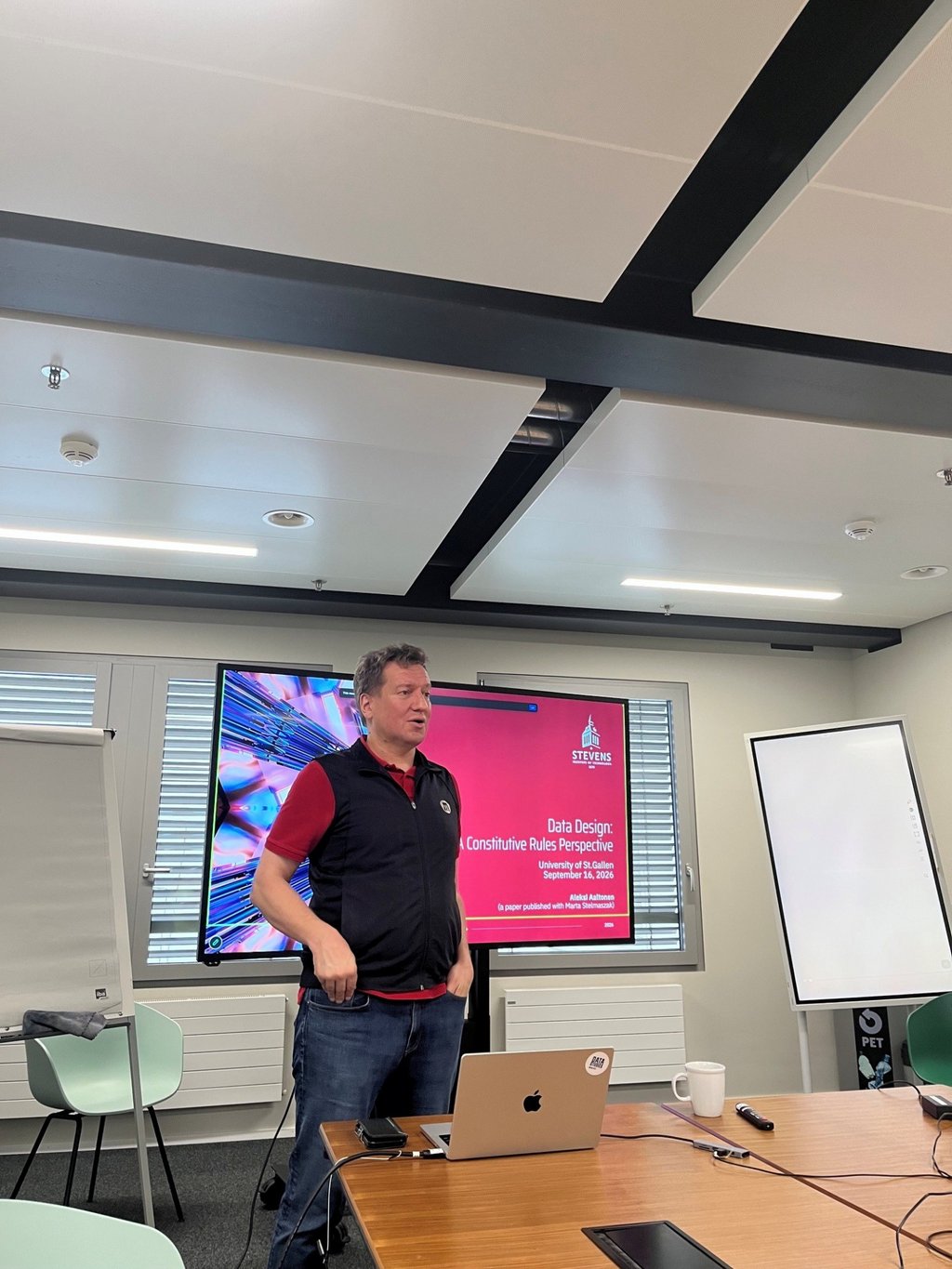
We tend to treat organizational data as assets that simply represent facts. Aleksi's work challenges that assumption: data have to be created, and how organizations create new data in practice is still undertheorized.
Sharing some insights:
🔹 Data design as a sociotechnical process. Organizations configure data-producing arrangements that let them turn events, entities, and people into data points. This goes well beyond conceptual modeling.
🔹 Constitutive rules as an analytical lens. Cultural conventions, institutional orders, and technical constraints determine what can become data at all. Making these rules explicit shows how data shape organizations and their actions.
🔹 "Better," not "right." In the case of a gender identity data project at a large U.S. university, the improved arrangement did not follow fixed data quality criteria.
🔹 Data design as innovation. When it enables data that are uniquely valuable to an organization, data design can amount to innovation.
Thanks again, Aleksi, for the inspiring discussion!